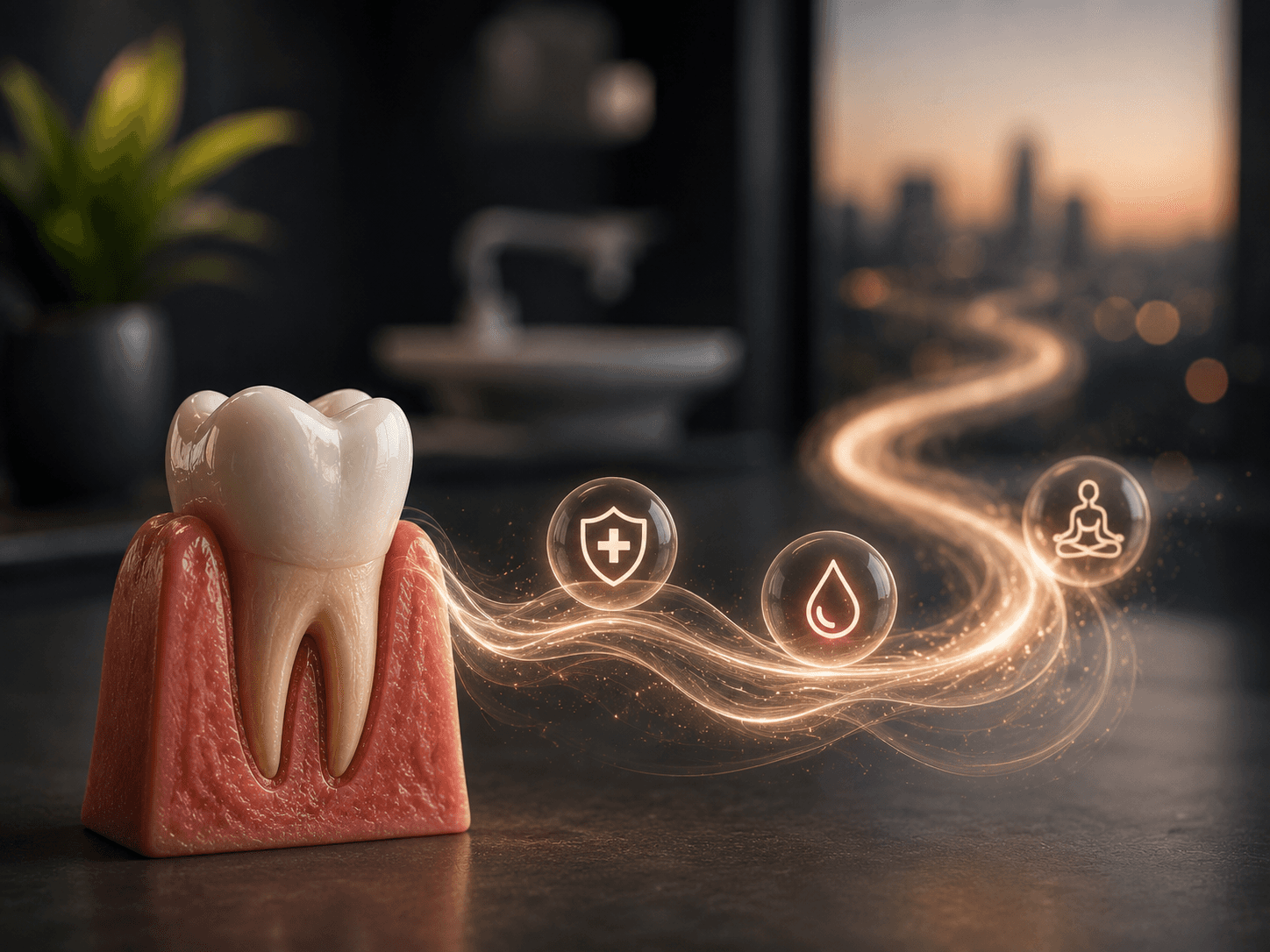
The link between periodontal disease and cardiovascular disease has been studied for thirty years. It is real, it is consistent, and it is more nuanced than the headlines suggest.
What the evidence shows
People with moderate to severe periodontitis have a measurably higher risk of cardiovascular events, and the association survives adjustment for smoking, diabetes and age. The proposed mechanism is chronic low-grade systemic inflammation: an inflamed periodontal surface roughly the size of a palm, leaking inflammatory mediators into the bloodstream continuously.
What it does not show
Treating gum disease has not yet been proven to reduce heart attacks. Association is not causation, and the trials that would settle it are difficult to run. Anyone selling you gum treatment as cardiac prevention is ahead of the evidence.
Why it still matters
Periodontal treatment demonstrably reduces systemic inflammatory markers, improves glycaemic control in diabetics, and keeps your teeth. Those are reasons enough. The cardiovascular question is a good argument for taking bleeding gums seriously rather than a promise about your heart.