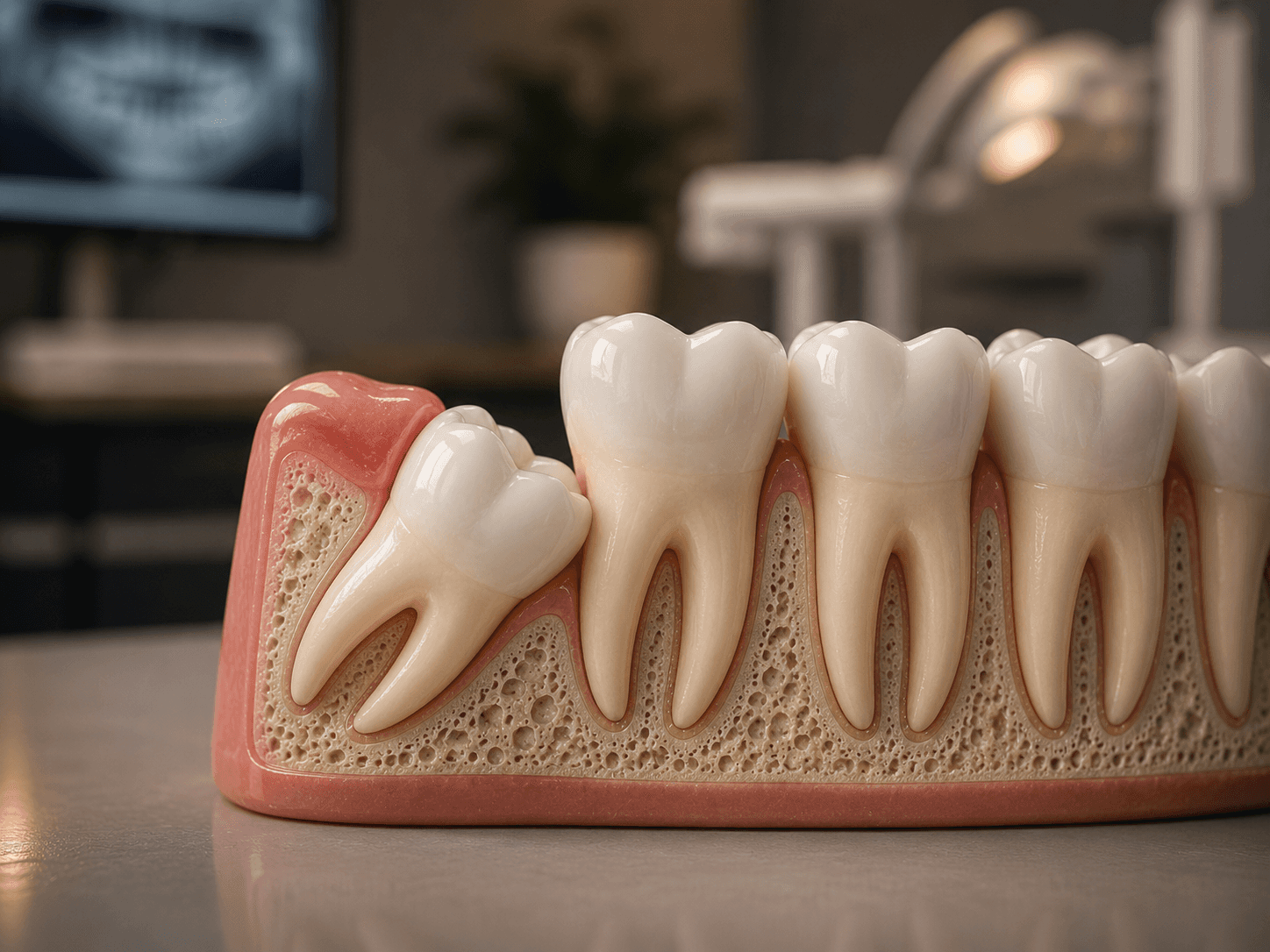
Most people come to us thinking about how a gap looks. Within a few minutes of the first scan the conversation usually changes, because what a missing tooth does underneath the gum is far more interesting than what it does in a photograph.
The bone is the real story
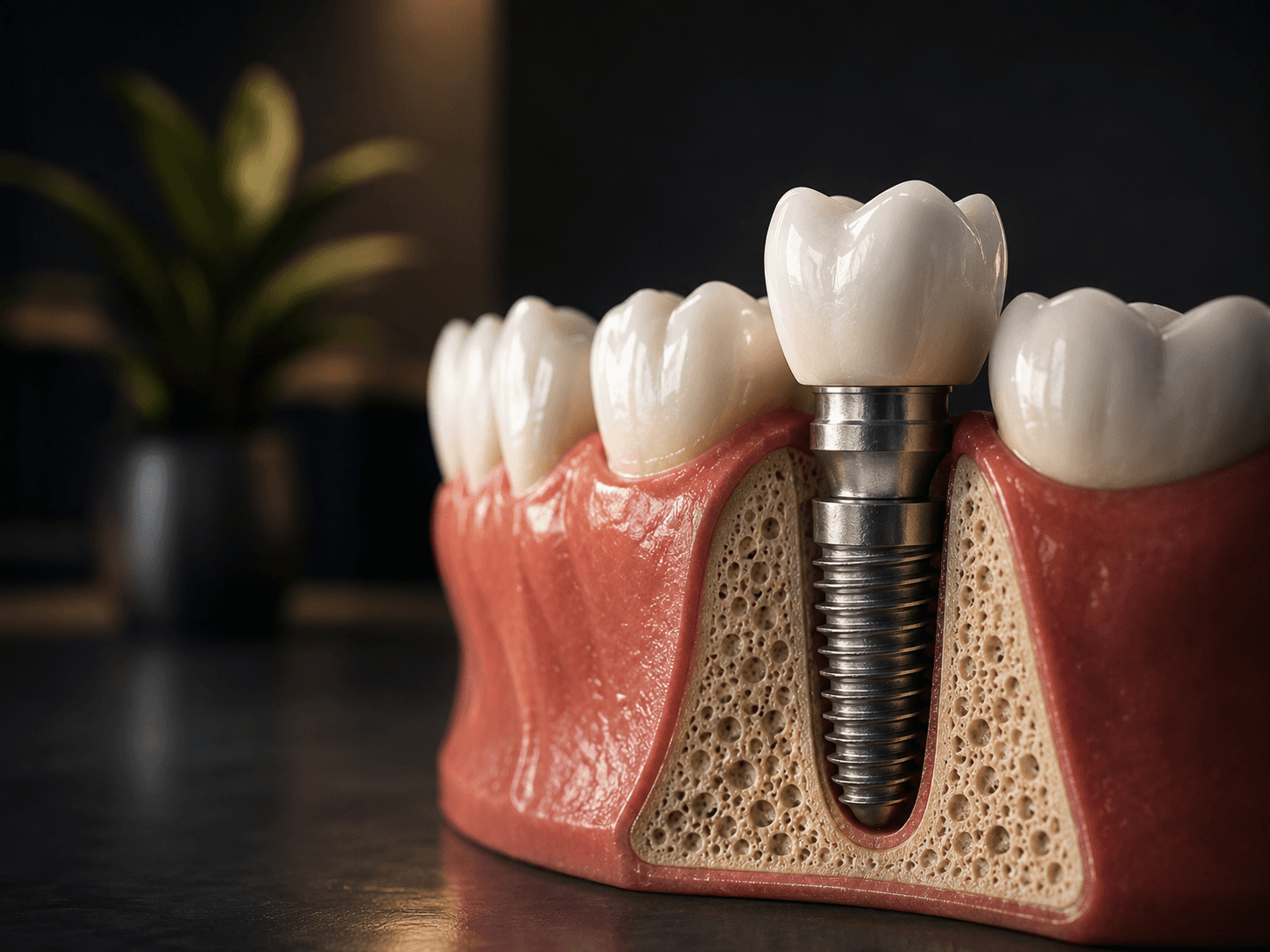
A tooth root loads the jawbone every time you chew, and that load is what tells the bone to maintain itself. Remove the root and the signal stops. Measurable resorption begins within the first six months and continues for years. An implant is the only replacement that restores the signal, which is why it is the only one that holds the shape of your face over decades.
Why the neighbours matter
Teeth are not fixed posts. They drift toward any available space, slowly and without you noticing, until the bite no longer meets the way it was built to. By the time the drift is visible it usually needs orthodontics to undo. Closing the gap early keeps the rest of the arch exactly where it is.
What the appointment is actually like
A guided implant placement is quieter than most people expect. The position is planned on a CBCT scan beforehand and transferred to a surgical template, so the placement itself is usually under an hour, under local anaesthetic, with sedation available if you want it. Most patients are back at work the next day.